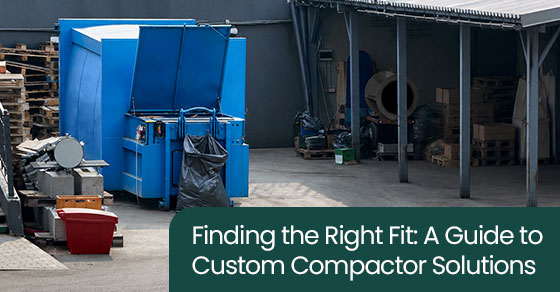
No two businesses throw out waste in quite the same way. A restaurant dealing with food waste, a warehouse breaking down packaging, and a retail plaza managing mixed refuse all need different equipment and service expectations. Choosing the right commercial compactor comes down to more than size alone. You need to look at how your operation runs, how much waste you produce, how much room you have on site, and what kind of support you expect from your provider.
At Butler Disposal, we help businesses compare practical options that align with daily operations, hauling needs, and long-term waste solutions. That includes helping clients choose the right compactor rental plan, understand service expectations, and build a more reliable approach to compactor maintenance over time. Here’s how to narrow down the right fit.
Why Compactor Rental Can Be a Smarter Waste Solution
For many businesses, renting makes more sense than buying. A compactor rental lowers upfront costs, which is especially helpful when you are improving operations without committing major capital to equipment ownership. It also gives you access to professional installation, staff training, and built-in support.
Rental can be a practical choice when business needs shift over time. If your waste volume changes or your site requirements evolve, it is easier to adjust with a provider that already understands your operation. For businesses looking for dependable waste solutions without taking on the full burden of ownership, rental often creates more flexibility and less risk. It can even make budgeting easier when compactor maintenance and service support are already built into the arrangement.
How to Choose the Right Commercial Compactor for Your Business
Start by Evaluating Your Waste Stream
The first step is understanding what your business is actually throwing away. Waste type affects compactor design, cleanliness requirements, odour control, and how often material needs to be hauled off-site. A system that works well for dry cardboard may be the wrong choice for a business producing wet or leaking waste every day.
Businesses should assess whether their waste stream includes:
- Wet waste, such as food scraps or organic material
- Dry waste, such as packaging, plastics, or paper
- Cardboard-heavy waste from shipping or inventory turnover
- Mixed waste from day-to-day operations
- High-volume general refuse from busy commercial sites
Wet waste usually calls for equipment that contains liquids and helps control mess. Dry waste can often be handled with a different setup that focuses on efficient compaction and straightforward hauling. When you start with the waste stream, it becomes much easier to choose a commercial compactor that supports safe, clean, and efficient disposal.
Measure Waste Volume Before Choosing a Unit
Waste volume matters just as much as waste type. A business that fills a few bins a week has very different needs from one that generates several tonnes of material in the same period. Getting this wrong can create ongoing problems. A compactor that is too small can lead to overflow, extra pickups, and disruption around your loading area. A unit that is too large can leave you paying for more equipment than your operation actually needs.
In general, smaller operations may be better suited to a compact vertical unit, while higher-volume sites often benefit from a larger stationary or self-contained system.
To estimate your waste volume, ask:
- How much waste do we produce in a day or a week?
- Does waste volume stay consistent, or does it spike seasonally?
- How often do we currently need pickups to keep the site under control?
Those answers create a more realistic picture of what capacity your equipment should handle. They also help shape a rental and service schedule that supports better waste solutions over time. For many businesses, that process leads to a more efficient commercial compactor setup and fewer avoidable hauling issues.
Match the Compactor to Your Available Space
Even the right equipment on paper can become the wrong choice if it does not fit the site. Before choosing a unit, look closely at your loading area, enclosure requirements, and the path collection vehicles will need to access the compactor.
Some properties have a generous service yard and can support larger equipment without issue. Others operate in tighter commercial footprints where every square foot matters. In those cases, a vertical system may be the better fit. For larger sites with room to accommodate hauling access and container placement, a bigger system may be more practical.
Site layout should always be part of the conversation. The unit needs to fit the day-to-day workflow of your business, and pickup access has to be straightforward enough to avoid delays, blocked loading areas, or safety concerns.
Choose the Right Commercial Compactor Type for Your Operation
Once you understand your waste stream, volume, and available space, you can compare the main compactor types more confidently.
| Compactor Type | Best For | Waste Type | Space Considerations |
|---|---|---|---|
| Stationary Compactor | Warehouses, distribution centres, manufacturing sites | Dry waste, cardboard, packaging | Requires space for the compactor and a separate container |
| Self-Contained Compactor | Restaurants, grocery stores, food processors | Wet waste, leaking waste, mixed refuse | Needs room for a larger sealed unit and truck access |
| Vertical Self-Contained Compactor | Properties with limited space, smaller commercial sites | Light wet waste, mixed waste, lower-volume refuse | Good for tighter footprints where a full-sized unit may not fit |
Choosing the right commercial compactor at this stage can make day-to-day waste handling far easier to manage. The goal is to choose the unit that supports how your team actually works, not simply the one with the most capacity.
Consider Installation, Power, and Ongoing Support
Choosing equipment is only part of the decision. Businesses also need to think about what happens before and after the unit arrives. Installation requirements, available power configuration, staff training, and service response all play a role in whether the equipment performs reliably.
A full-service compactor rental can simplify the process by covering setup, support, and ongoing compactor maintenance. That can reduce downtime and give your team one clear point of contact when questions or service issues come up. It also gives businesses access to stronger waste solutions without the added burden of managing equipment ownership internally.
Before signing a rental agreement, ask a provider:
- What site preparation is required before installation?
- What power supply does the unit need?
- Will staff receive training on safe operation?
- What is included in routine compactor maintenance?
- How quickly can service be dispatched if the unit goes down?
These details often make the difference between a smooth rollout and a frustrating one, especially when your compactor rental agreement includes clear service expectations and dependable compactor maintenance support.
Which Commercial Compactor Works Best for Different Business Types
Compactor selection becomes much easier when you look at how the property actually operates. Different businesses produce waste in different ways, move it through the site differently, and face different space and sanitation demands. A setup that works well for a food-based operation may create headaches at a warehouse, while a unit sized for a large industrial site may be impractical for a tighter commercial property.
With that in mind, here is how common business types often line up with different equipment needs:
- Restaurants and grocery operations often need self-contained units for wet waste and stronger sanitation control.
- Warehouses and manufacturers frequently use stationary systems for dry waste, cardboard, and packaging material.
- Commercial properties with tight service areas may be better suited to vertical units that save space.
- Multi-tenant sites may need flexible waste solutions that balance shared access, reliable pickups, and manageable footprint requirements.
When the compactor matches the business type, operations tend to run cleaner and more efficiently. The result is a commercial compactor setup that supports the site instead of creating extra work for staff.
Choose a Commercial Compactor Rental That Fits Your Waste Goals
The right commercial compactor should match your waste type, volume, site space, and support needs, not just your budget. A thoughtful setup can reduce clutter, improve sanitation, and make hauling more efficient across your operation.
At Butler Disposal, we bring hands-on experience in commercial waste management and help businesses sort through the practical details that affect performance over time, from equipment fit and pickup access to service reliability and long-term support. Our team works closely with clients to recommend a commercial compactor system that fits the property, the waste stream, and the service schedule, while supporting practical waste solutions that hold up over time.
If you are comparing options, the best place to start is with a provider that can help you choose a commercial compactor rental that aligns with your waste goals and day-to-day demands. Reach out to Butler Disposal today at 905-642-0162 or click here to request a quote online.
FAQ About Commercial Compactor Selection
What is the difference between a stationary and self-contained compactor?
A stationary unit is often used for dry waste and works with a separate container. A self-contained unit is better for wet or leaking waste because it keeps material enclosed in one sealed system.
Is compactor rental better than buying?
For many businesses, rental is the better fit when lower upfront costs and built-in support matter. It can also make installation, service, and ongoing adjustments easier to manage.
How often does a commercial compactor need maintenance?
Service needs depend on how heavily the equipment is used, but regular compactor maintenance helps reduce downtime and supports better long-term performance.
Can a compactor help reduce waste hauling costs?
Yes. Compacting waste can reduce collection frequency, improve site efficiency, and help businesses manage disposal costs more effectively.