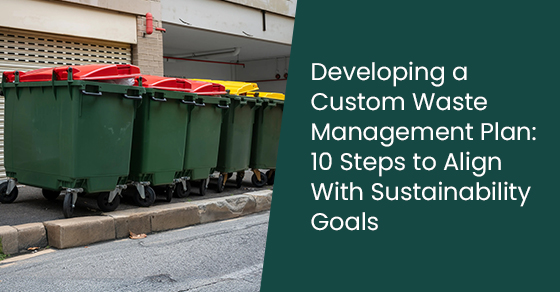
A useful waste management plan should reflect what actually happens inside your business. That means understanding where waste comes from, how it moves through your operation, what happens to it after collection, and where practical changes may be possible.
At Butler Disposal, we believe effective waste solutions should be built around real waste streams, operational needs, and business priorities rather than a standard template. The following ten-step framework can help you connect everyday waste handling with clearer sustainability goals.
How to Build a Custom Waste Management Plan
Before changing containers, pickup schedules, or internal procedures, establish what your current system looks like. From there, you can set realistic priorities, make practical adjustments, and review whether those changes are working over time.
1. Assess Your Current Waste Practices
Start by documenting how waste is generated, collected, stored, and removed throughout your operation.
Look at the areas or activities that contribute most to routine waste generation. Record the containers you currently use, how waste reaches them, and how collection is arranged. The purpose isn’t to assume the existing system is inefficient. It’s to establish a clear starting point.
2. Identify Your Main Waste Streams
Total waste volume only tells part of the story. It’s also useful to understand what your business is regularly throwing away.
Group recurring materials into categories that make sense for your operation. This can help identify where reduction, reuse, recycling, or another waste disposal approach may be worth exploring.
Not every material has the same handling or diversion options, so confirm appropriate requirements before changing how a waste stream is managed.
3. Establish Clear Sustainability Goals
Broad goals such as “reduce waste” can be difficult to act on. Define what you want the plan to accomplish in practical terms.
Your priorities might involve reducing unnecessary material entering the waste stream, improving internal sorting, or creating more consistent waste-handling procedures. The right goal depends on what you learned during the initial assessment.
Keep goals realistic enough to fit your available resources and normal operations.
4. Set a Baseline for Measuring Progress
If you want to know whether changes are working, you need something to compare them against.
Use information your organization can track consistently, such as known waste volumes, collection patterns, or another practical internal measure. Verified service records may also provide useful information.
A simple baseline that your team can maintain is generally more useful than an elaborate reporting system that quickly gets abandoned.
5. Look for Opportunities to Reduce Waste at the Source
Disposal shouldn’t be the first place you look for improvements. Examine where unnecessary materials enter your operation in the first place.
Depending on the business, that may mean reviewing purchasing habits, packaging, disposable products, inventory practices, or other recurring sources of waste.
Reducing material before it reaches a collection container can complement your recycling and commercial waste services rather than relying entirely on downstream disposal.
6. Develop Practical Reuse and Diversion Strategies
Once you know what you’re generating, consider whether appropriate materials can be reused internally, redirected, recycled, or otherwise managed outside the general waste stream.
The right approach depends on the material and available collection or processing options. Avoid building a program around assumptions about what can be recycled or diverted.
Employee participation matters here, so keep sorting and handling instructions straightforward enough to follow during normal work.
7. Match Collection Service to Operational Needs
Containers and pickup arrangements should reflect how your business actually operates.
Consider typical waste volume, available space, container placement, and how frequently material needs to be removed. Seasonal changes or periods of higher activity may also affect collection requirements.
We work with commercial customers and tailor service arrangements to their operating needs, rather than treating every site the same.
8. Create Clear Internal Waste Procedures
Define what employees are expected to do with waste once it leaves their immediate work area.
Responsibilities should be clear, especially where several waste streams need to remain separate. Straightforward signs or internal instructions can help staff identify the appropriate collection point without adding unnecessary complexity.
Consistency is the goal. A well-designed plan won’t accomplish much if nobody knows how to follow it.
9. Communicate the Plan to Employees
People need to understand both what is changing and what their role is.
Keep guidance relevant to each employee’s responsibilities instead of overwhelming staff with every detail of the plan. Reinforce key procedures when new employees join or when waste-handling practices change.
Clear communication makes it easier for the system you’ve designed to become part of normal operations.
10. Review Results and Adjust the Plan Over Time
Business operations change, and your waste plan should be able to change with them.
Compare current performance with the baseline and priorities established earlier. Look for areas where container capacity, collection arrangements, internal procedures, or sustainability goals may need adjustment.
Regular review keeps waste solutions connected to actual business conditions instead of leaving you with a plan that made sense several years ago but no longer reflects your operation.
How Commercial Waste Services Fit Into the Plan
An external waste provider is one part of a broader waste management strategy. Your business still needs to make internal decisions about purchasing, reduction, sorting, reuse, and sustainability priorities.
Commercial waste services support that plan by providing appropriate collection and disposal arrangements for the waste your operation generates. When discussing service, communicate expected waste volume, operating conditions, available space, and pickup requirements.
At Butler Disposal, we can help businesses consider waste-management options that align with their day-to-day needs.
Common Mistakes When Developing a Waste Management Plan
One common mistake is setting ambitious sustainability targets before determining what the business actually throws away. Without that information, priorities can become disconnected from the real waste stream.
Copying another organization’s plan can create a similar problem. Different businesses have different materials, layouts, operating schedules, staffing requirements, and collection needs.
A plan can also fail when procedures are written down but never clearly explained to employees. Finally, avoid treating the finished document as permanent. Waste volumes and business priorities can change, so the plan needs periodic review.
Build Waste Solutions Around Your Business Goals
Effective waste solutions connect everyday waste handling with goals your organization can define, measure, and review. Assessing current practices, understanding waste streams, setting priorities, coordinating collection, and tracking results all help create a plan grounded in how your business actually operates.
We provide commercial waste management services for businesses across the GTA and can help you explore service options that fit your operational requirements.
Reach out to Butler Disposal today at 905-642-0162, email us at [email protected] or click here to get in touch online.
Frequently Asked Questions
What Should a Business Waste Management Plan Include?
A useful plan can address current waste streams, internal collection procedures, reduction or diversion priorities, service requirements, staff responsibilities, and how progress will be reviewed.
The exact components should reflect your organization’s operations and sustainability objectives rather than following a single standard template.
How Often Should a Waste Management Plan Be Reviewed?
Review the plan when waste volumes, operating conditions, services, or organizational priorities change.
Periodic reviews also give you an opportunity to compare current results with your original baseline and identify areas where procedures or service arrangements may need adjustment.
How Can Businesses Reduce the Amount of Waste They Dispose Of?
Start by identifying recurring sources of waste. From there, consider whether appropriate materials can be reduced at the source, reused, or diverted before they enter the general disposal stream.
The most suitable strategies depend on the materials your organization actually generates and the options available for handling them.
What Should I Consider When Choosing Commercial Waste Services?
Consider your normal waste volume, the types of material you generate, available container space, operating schedule, and expected collection needs.
Discuss those details directly with your waste provider and confirm relevant service and material requirements before choosing an arrangement.
Can a Waste Management Plan Support Sustainability Goals?
Yes. A structured plan can help connect specific waste-related actions with clearly defined sustainability priorities and give your organization a way to monitor progress.
The results depend on the goals you choose, the actions you implement, and the waste streams involved. Creating a plan by itself doesn’t guarantee a particular environmental outcome.